Introduction
Non-melanoma skin cancer (NMSC), mainly basal cell carcinoma (BCC) and squamous cell carcinoma (SCC), significantly burdens the Australian population and healthcare system.1 Australia is home to the highest incidence of NMSC in the world, with two in three Australians diagnosed with NMSC by the age of 70.2,3 It is the most common cancer in Australia, with incidence rates five times higher than in the USA or Europe.4
A clear gradient in Australian NMSC incidence exists in relation to latitude (with Queensland having the highest rate), secondary to sun exposure, climate, ultraviolet radiation levels and a predominantly fair-skinned population.5,6 This leads to high referral volumes to Queensland plastic and reconstructive surgery (PRS) outpatient clinics, often exceeding consultation and treatment capacity.7 The COVID-19 pandemic further strained resources, causing PRS outpatient clinic reductions and extended NMSC consultation and treatment delays.
In a systematic review by Naiker and colleagues, three targets were identified to reduce specialist outpatient waiting times: resource realignment, operational efficiency and process improvement.8 As such, we designed a multi-consultant outpatient clinic to address all three domains and reduce the accumulated NMSC referral backlog.
This study aims to evaluate the patient throughput, attendance, wait-time characteristics and surgical outcomes of a single session multi-consultant outpatient clinic to inform strategies in the management of NMSC referrals.
Methods
Study setting
This prospective cohort study took place at the Plastic and Reconstructive Surgery Department of the Royal Brisbane and Women’s Hospital. Participants were identified and included from a multi-consultant outpatient clinic held on a Saturday in September 2023. All recruited patients were within the Royal Brisbane and Women’s Hospital referral catchment area, had biopsy-proven NMSC and were triage category one according to Queensland Government criteria.9 Two lesions were excluded from analysis—one undifferentiated lesion and one dysplastic naevus—leaving 209 lesions in 155 patients for inclusion.
Ethical approval
Ethical exemption was granted by the Metro North Health Human Research Ethics Committee (number: EX/2023/MNHA/102934) and the study was reported in accordance with the STROBE guidelines.10
Clinic design
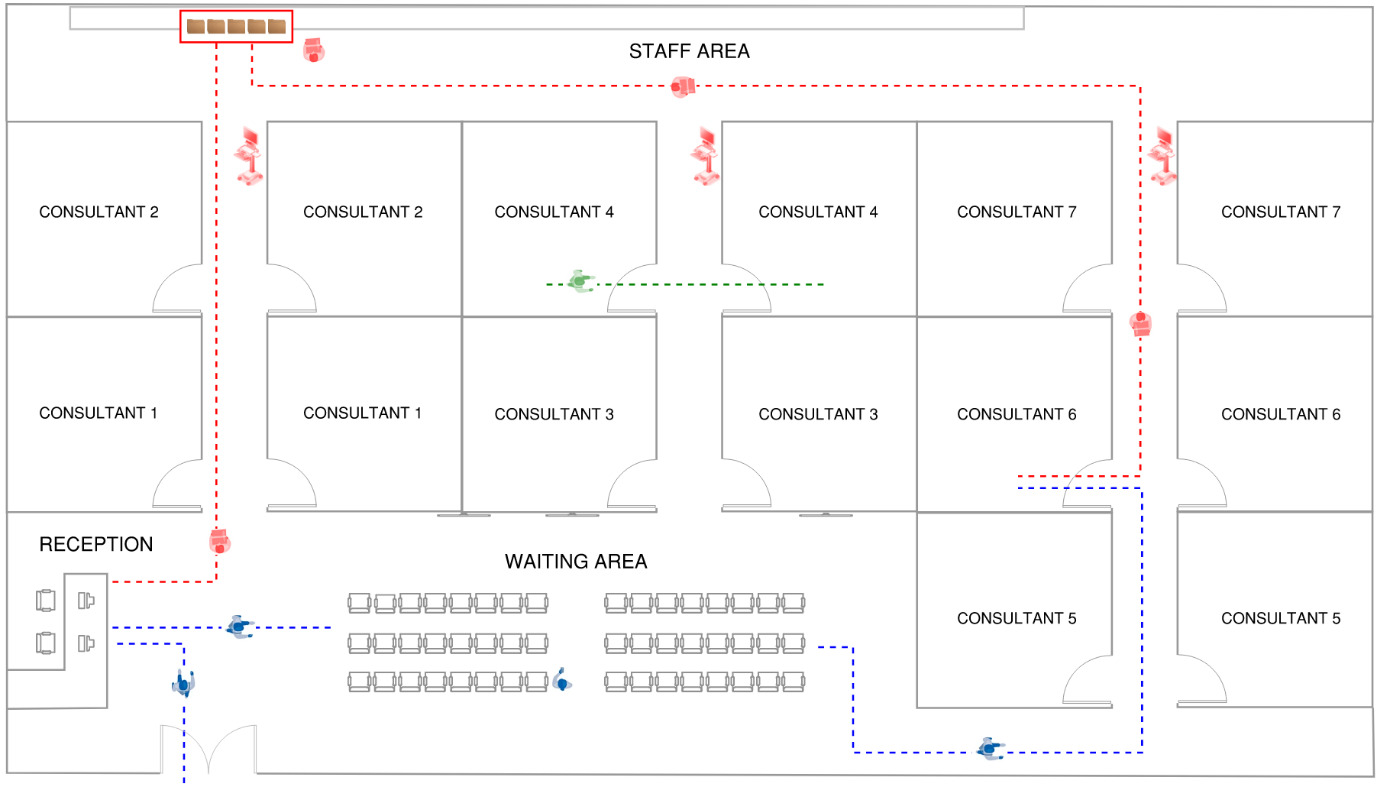
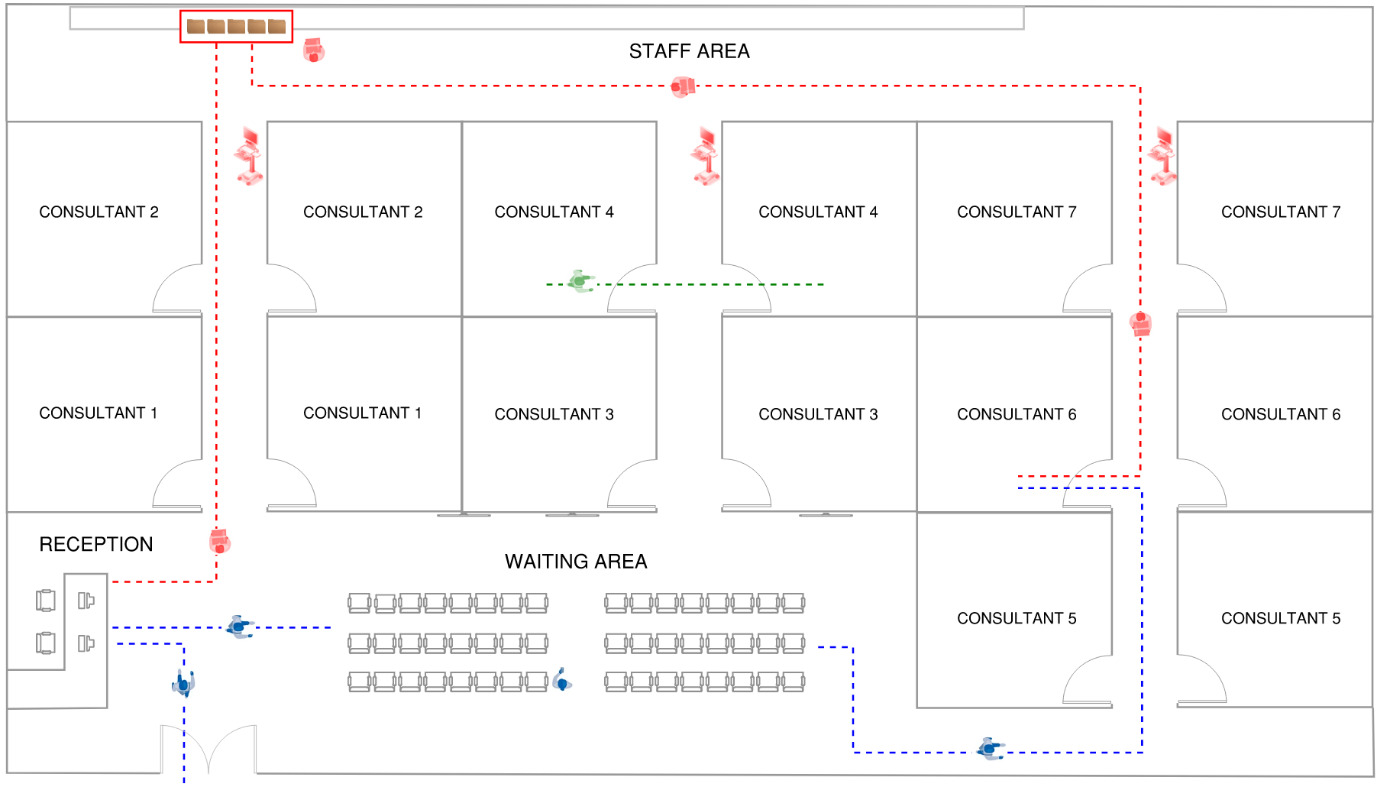
The clinic layout is shown in Figure 1. The clinic involved seven consultants, seven surgical trainees, three nurses and four administration officers. The clinic’s operational design focused on maximising efficiency and patient flow. Each consultant had two pre-allocated rooms to enable continuous patient care: the consultant saw a patient in one room while nurses prepared the next patient in the adjacent room. A centralised wait list dynamically allocated patients to the next available consultant, rather than pre-assigning patients to a specific surgeon, minimising idle time across the clinic. Pre-prepared patient packs and corridor trolleys with relevant forms supported rapid workflow.
This design targeted the three key domains in outpatient delay reduction: resource realignment through the simultaneous use of seven consultants, operational efficiency through dual-room allocation with dynamic queuing, and process improvement through standardised proformas with prospective data capture.
Outcome measures
Primary outcomes: (1) time from initial biopsy to PRS consultation; (2) time from PRS consultation to surgery.
Secondary outcomes: (1) clinic attendance rates; (2) clinic throughput; (3) incomplete excision rate.
Variables
Data from patient proformas were collected and entered into a study database. Variables included patient demographics, NMSC lesion type and location, date of initial biopsy, clinical disease at the time of consultation, date and location of surgery, and biopsy histopathology. Surgical margin status was classified as clear (tumour > 1mm from margin), close (tumour ≤ 1 mm from margin) or involved (tumour at the margin).11
Statistical methods
Categorical variables were presented as numbers and percentages. Continuous variables were assessed for normality using histograms and the Shapiro-Wilk test. Normally distributed variables were presented as mean and standard deviation, while non-normally distributed variables were presented as median with interquartile range (IQR).
Results
Clinic performance
Of the 166 patients scheduled, 155 attended (93.4% attendance rate). Fourteen patients were scheduled per 15-minute block, with all patients seen within three hours and 15 minutes (see Figure 2). This equates to approximately 48 patients per hour.
Patient demographics
A total of 155 patients attended the clinic (Table 1). The median age was 74 years. One hundred and five patients (67.7%) were male. Forty patients (25.8%) presented with multiple lesions (two or more sites requiring surgery).
Lesion characteristics
The characteristics of the NMSC lesions are shown in Table 2. The most common subtype was BCC (135 lesions, 64.6%), followed by SCC (56 lesions, 26.8%). Lesions were distributed across various anatomical sites, with the majority (80.1%) located on the head and neck.
Surgical characteristics
Definitive surgical excision was performed in 91 per cent of patients, while 9 per cent opted for non-surgical management. As shown in Table 2, postoperative pathology confirmed residual disease in 72 per cent of excisions and involved margins occurred in 4.9 per cent of cases.
Venue for surgical excision
Of the 141 patients who underwent surgical excision, procedures were performed across two primary locations, with 86 (61%) performed in operating theatres and 55 (39%) in the minor procedures unit.
Timepoints in patient care
The median time from biopsy to PRS consultation was 150 days (IQR 114–185). The median time from PRS consultation to surgery was 45 days. While all referrals were triage category one (recommended appointment within 30 days), only one patient (0.5%) was seen within this timeframe.
Discussion
In the wake of increasing referral strain on public outpatient capacity, we established an outpatient model of care to expedite assessment and improve the pathway of patients with NMSCs. In this study, a single-session, multi-consultant clinic assessed 155 patients within three hours and 15 minutes, a throughput that would have required 10–12 standard single-consultant PRS clinic sessions at our institution. The attendance rate of 93.4 per cent indicates that Saturday scheduling was acceptable in our patient cohort. A median biopsy-to-consultation interval of 150 days identifies outpatient consultation access, rather than operative scheduling, as the principal rate-limiting step in the NMSC pathway.
Comparison with existing outpatient models
The skin lesion assessment and management (SLAM) model, as well as other see-and-treat pathways, address consultation and surgical bottlenecks through the delivery of both assessment and excision within a single encounter for ambulatory lesions, with reported wait-time reductions of up to 76 per cent.12,13 Our model addresses a different patient population, with two-thirds of our cohort requiring operating theatre access for anaesthetic input, precluding same-day, clinic-based surgery. The multi-consultant clinic addresses the consultation bottleneck in isolation, clearing 155 category-one referrals in a single morning session. The two approaches are complementary: see-and-treat for ambulatory-eligible patients and multi-consultant for those requiring formal operative planning.
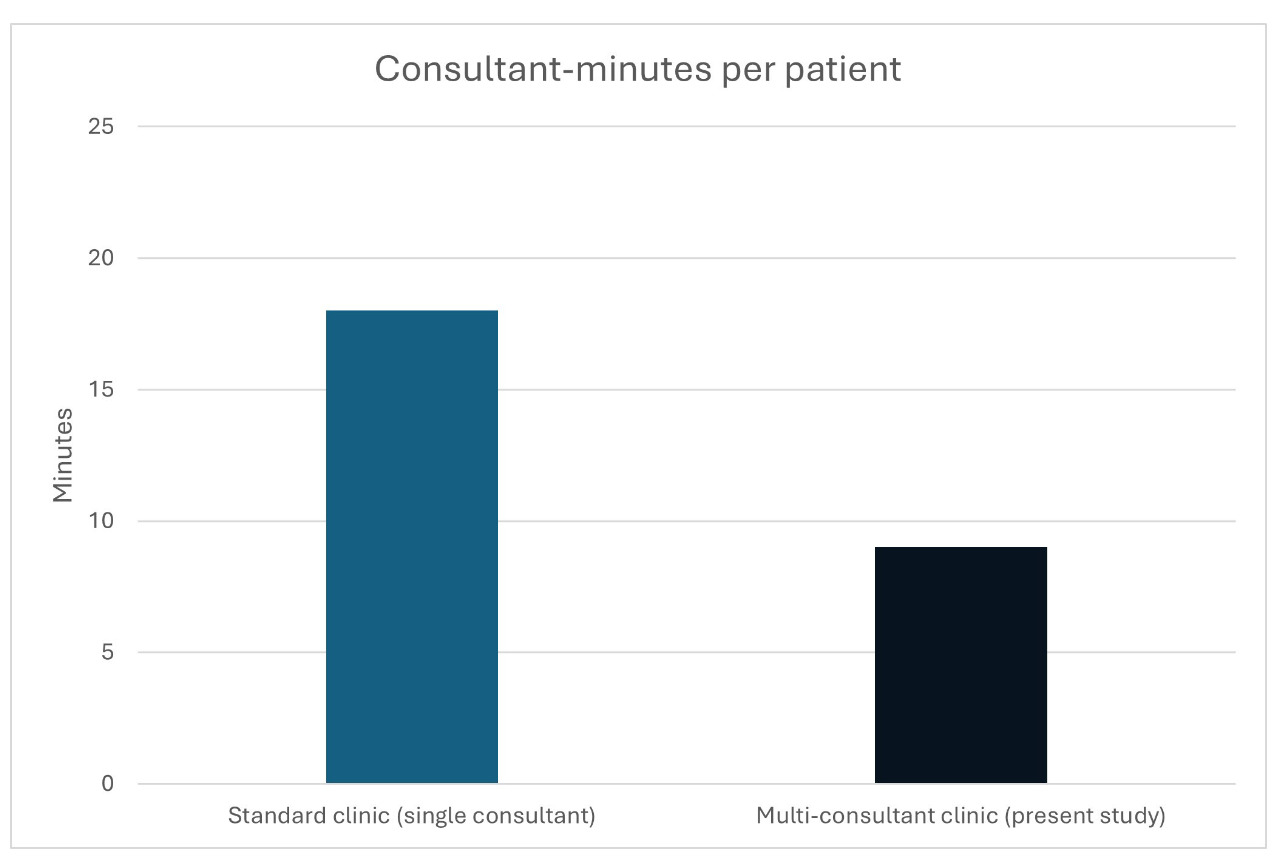
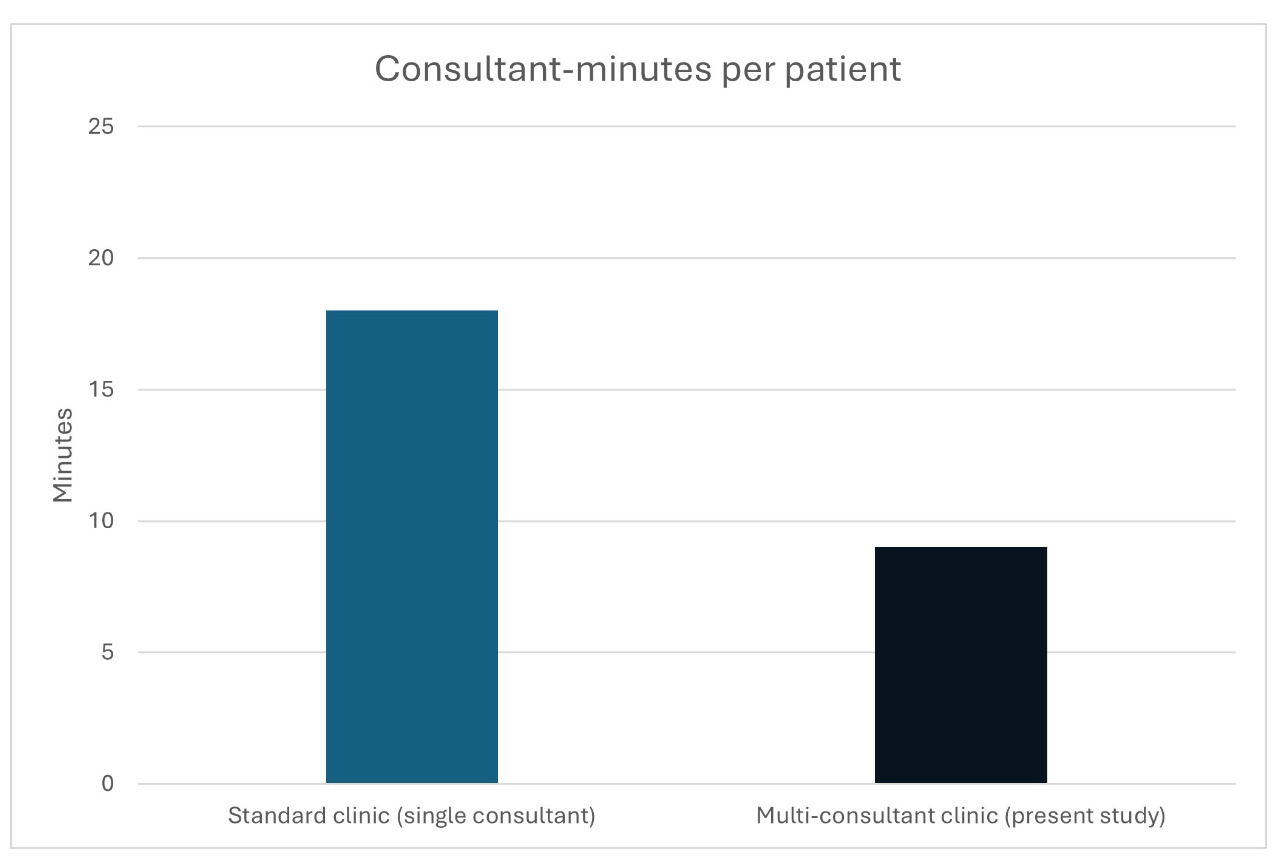
Across the clinic, 155 patients were seen in three hours and 15 minutes by seven consultants. The multi-consultant model required 22.75 consultant hours to assess 155 patients, equivalent to 0.15 consultant-hours, or nine minutes, per patient. In comparison, the standard existing model comprises one consultant conducting a four-hour clinic reviewing 12–15 patients, equivalent to 0.27–0.33 consultant hours, or 16–20 minutes per patient.
This represents an approximate 45–55 per cent improvement in consultant-hours per patient. This cost-efficiency gain must be interpreted alongside the additional Saturday staff loading cost, however, the same model can be delivered within standard weekday operating hours to mitigate the additional weekend cost. In the setting of sustained referral pressure and prolonged outpatient delays, a concentrated high-throughput model still provides a cost-efficient approach to improving access to specialist care. The reported AU$1339 per patient saving in the SLAM model12 provides a useful benchmark for the potential economic benefit of outpatient service redesign, although dedicated cost-effectiveness analysis was beyond the scope of this study.
The clinic’s physical design also supported informal discussions of complex cases, allowing real-time collaborative decision-making between consultants and potentially improving the quality and consistency of patient management.
Time to treatment
The median time to consultation was 150 days and the median time between consultation and surgery was 45 days. Only one of 155 category-one patients was reviewed within the recommended 30-day timeframe, underscoring the burden of disease on existing PRS resources, particularly at the outpatient consultation stage. This pattern is consistent with Queensland Audit Office findings7 that specialist outpatient long waits increased by 72 per cent between 2017 and 2020, with the COVID-19 referral halt producing a backlog that persisted beyond 2021. The multi-consultant clinic was developed to address this access constraint through a redesigned outpatient model that improved service efficiency across three domains: resource realignment through the use of seven consultants, operational efficiency through dual-room allocation and operational efficiency through standardised data capture.
Impact of delay to care
Postoperative histopathology confirmed residual disease in 136 of 187 excised lesions (74.3%). Surgical margins were assessed among lesions with residual disease on histopathology (n = 136); clear margins were achieved in 122 (89.7%) and close margins in six (4.4%). Involved margins were identified in eight lesions, representing an incomplete excision rate of 4.2%. This falls within the range reported in current literature.14 Published studies indicate that incomplete excision rates of NMSCs range between 4.4 per cent and 14.7 per cent, with this rate increasing significantly to 20–61.5 per cent for lesions located on the head and neck.15–17
The incomplete excision rate of 4.2 per cent aligns favourably with the lower end of the reported range in the literature, suggesting that the delays in time to surgery did not significantly compromise patient outcomes. Despite the prolonged wait times observed, the low rate of incomplete excisions indicates that the lesions had not advanced to a stage that precluded successful surgical management.
Limitations
Our study is not without limitations. Our single-centre study in southeast Queensland, conducted over a short period, limits the generalisability of our findings. The cross-sectional design prevents us from understanding disease progression and long-term outcomes. Our cohort, drawn from a region with high ultraviolet exposure and specific ethnicities, is at higher risk of NMSC. While our multi-consultant clinic model shows promise, more extensive studies are needed to confirm its validity and broader clinical use.
Conclusion
This study introduces a novel multi-consultant clinic approach in Queensland, Australia, to tackle long wait times for specialist PRS consultations in managing NMSC. By restructuring the traditional outpatient workflow and enabling parallel specialist consultations, a large volume of patients was efficiently assessed within a single clinic session.
The high-volume clinic effectively addresses and reduces the bottleneck in the NMSC treatment pathway—access to specialist outpatient consultation. The collaborative clinic environment facilitated real-time discussion among consultant surgeons, enhancing decision-making efficiency and surgical planning for complex cases.
Our study has opened the door for areas of future research with the intention to optimise the management of NMSCs in the outpatient setting and improve overall patient care. Based on our finding that one in three lesions had no residual disease on formal histopathology, the development of a predictive modelling tool to identify patients unlikely to have residual disease after initial biopsy may reduce referrals to specialist outpatient clinics and improve patient outcomes. Additionally conducting an economic analysis of the multi-consultant clinic model considering staffing costs, efficiency of Saturday clinic model compared to weekday clinics, patient and family economic impact (time off work, travel), and hospital financial penalties for wait-time breaches may provide a deeper understanding of the impact on patient care, efficiency and economic factors.
By exploring these research areas, we can gain a more comprehensive understanding of the multi-consultant clinic model and its subsequent impact on patient care, health efficiency and economic considerations.
Conflict of interest
The authors have no conflicts of interest to disclose.
Funding declaration
The authors received no financial support for the research, authorship and/or publication of this article.
Revised: March 22, 2026 AEST